Showing posts with label lesson planning. Show all posts

May 5, 2024

Enhancing Reading Comprehension with Cross-Curricular Scavenger Hunts

 Written by Emily Upton - Posted May 5, 2024

The worst thing about teaching science and social studies was the textbooks. They were a super boring, dated snoozefest that did not engage my students, so they immediately forgot what they read. Want an alternative to the dusty textbooks sitting on your shelf? You need scavenger hunts. Picture your students being fully engaged in a fun and interactive learning experience that not only bolsters their reading skills but also covers a range of subjects such as science and history. 

No more boring worksheets, textbooks, or repetitive exercises. These scavenger hunts will transform your teaching while helping your students actually retain what they're learning. They're a chance for your students to collaborate while working on finding details in a text. These aren't your typical task cards! Read on for tips on how to use scavenger hunts in your classroom.

What Are Reading Scavenger Hunts?

Reading scavenger hunts are a combination of task cards and escape rooms while mixing in reading comprehension. Get your students up and moving as they learn about science and social studies topics! Each scavenger hunt includes 10 mini reading passages about a topic. 

Students will read the 10 short comprehension passages as they hunt for the passage that matches 
the "code word clue" on each card. 
As they collect their answers, they record them on the special recording sheet. At the end of the scavenger hunt, they unscramble the letters to reveal the secret word.

They are super easy to set up. Simply print and cut out the passage cards, then hide them around your classroom. Students will love hunting for each card in the scavenger hunt path! And you'll love that they are practicing rereading and finding details in a text.

Benefits of Cross-Curricular Reading Scavenger Hunts

Beyond the obvious benefits of being more engaging for students and giving you an alternative to boring textbooks, there are lots of benefits to using scavenger hunts in your classroom!

  • Get Students Moving: Scavenger hunts give your students a chance to get up out of their seats and move around the room. It's important to give our students chances to stand up and walk around throughout the day, and these allow you to do that without losing instructional time.

  • Practice Citing Answers: Students are required to write down the number of the card where they found the answer to the "code word clue". This helps students practice citing where they found their information! This is a great time for students to also practice reading to identify specific details in the text. They are looking for the sentence that contains the code word clue each time.

  • Create a Challenge: Instead of task cards that follow a specific order, students have to hunt through the cards to find the correct answer. This means that they will be rereading the passages over and over! Rereading the content will help the information stick, and having to search for the answers instead of knowing what comes next will keep them engaged in the challenge.

How to Use Reading Scavenger Hunts

You can use reading scavenger hunts in a variety of ways. They are a great review before an assessment on a specific topic. You could also use them to frontload information about a new unit. 

Scavenger hunts make great sub activities because there's not a lot of prep! Simply print the cards and leave them for your students.

For me, cross-curricular connections are my jam. I love using scavenger hunts to practice reading skills during science and social studies! This lets my students practice reading while also learning content for a different subject area.

Examples of Cross-Curricular Reading Scavenger Hunts

Ready to dive in? Check out these examples of cross-curricular scavenger hunts! Each scavenger hunt includes 10 short passages about the given topic.


Apr 15, 2024

Exploring the History of Earth Day in Upper Elementary

 Written by Emily Upton - Posted March 16, 2024

Get ready to be the Miss Frizzle of history and hop into your time machine to teach your students about the history of Earth Day! Let's take a trip back in time to 1970, an incredible year that sparked widespread environmental awareness and gave birth to the amazing celebration we now know as Earth Day. It's not just a history lesson, though - it's a chance to inspire our young learners to become the protectors of our planet's future! As upper elementary teachers, we have an opportunity to ignite their curiosity and passion for environmental activism by exploring the origins of this global movement.

history of earth day in upper elementary with earth day themed lesson resources

Imagine a world where pollution is everywhere and people don't care about the environment. But there's a tiny bit of hope - Earth Day! It was created by ordinary people who wanted to make a difference. Now, it's a day when people all over the globe come together to protect our planet. As teachers, we can use Earth Day to teach our students about the environment and how we can help. Let's talk about how to make history come alive for our students as we teach them about the history of Earth Day.

Understanding the Origins of Earth Day

Earth Day started in 1970 when people began to notice the increasing pollution levels and that we weren't treating the Earth well. Gaylord Nelson, a US senator, came up with the idea of a national day to raise awareness about environmental issues. Millions of people took to the streets on April 22, 1970, in the first-ever Earth Day celebration. Since then, Earth Day has become a global annual event that reminds us of our responsibility to keep our planet healthy and happy. As teachers, we can inspire our students to be the change-makers of tomorrow. Let's celebrate Earth Day every April 22nd and give a high-five to Gaylord Nelson and all the people who made it happen.

Why Should You Teach the History of Earth Day?

Teaching the history of Earth Day isn't just about memorizing dates and facts—it's about planting seeds of environmental awareness and activism in our students. By understanding how Earth Day came to be, kids can see how regular people, just like them, made a big difference. It can inspire them to take action and be stewards of the planet.

When students learn about the grassroots movement behind Earth Day, it shows them that change is possible, even when things seem pretty bleak. They see how people come together to tackle big problems, and it gives them hope for the future. Plus, it gets them thinking about their own impact on the environment and how they can make a positive difference!

Integrating the history of Earth Day into the curriculum is a no-brainer. It's a chance to teach important lessons about environmentalism, activism, and the power of community. Plus, it fits right in with subjects like social studies, science, and even language arts. By weaving Earth Day into our lessons, we're giving students a deeper understanding of the world around them and empowering them to be changemakers. And hey, who knows? Maybe we'll inspire the next generation of environmental leaders along the way.

Activities for Teaching the History of Earth Day

If you want to teach about the history of Earth Day with low-prep, engaging resources, you've come to the right place. These activities will streamline your lesson prep while keeping your students engaged in rigorous practice activities.

History of Earth Day Videos

I love using quick videos to introduce my lessons. These are some of my favorite free resources for starting your history of Earth Day lessons:

🌎 I love using these PBS Kids Videos to introduce holidays! They're short and to the point, and give your students come background knowledge on how Earth Day came to be. I always used these as an intro before we did any holiday activities in class!

🌎 If you aren't using Mystery Science in your classroom, you are seriously missing out. These short videos are super engaging, and they have a million episodes on YouTube that you could use for Earth Day!

History of Earth Day TImeline and Passages

These short engaging passages and timeline activity will quickly teach your students everything they need to know about the history of Earth Day. With comprehension questions and a built-in mini-project, the digital and printable versions of this resource will give you options when assigning that fit the needs of your classroom.

Teachers said, "I used this to pre-teach our Earth Day activities. My students and I enjoyed it! Good layout and age-appropriate information in a quick and efficient way to learn the history of Earth Day."


History of Earth Day Escape Room


Looking for an activity that is more collaborative? This escape room covers the history of Earth Day, as well as information about recycling and Earth Day fun facts. Students answer comprehension questions and use code ciphers to crack the code in order to complete the final coloring activity!

Escape rooms get your students up and moving. Use as a center activity, in small groups, or as an early finisher activity!


No matter what activity you choose, incorporating a history of Earth Day lesson into your plans will help your students to understand more about this important holiday. Instead of just teaching your students why they should care for our planet, help them understand how ordinary people came together to create maor change to help our home.


Feb 1, 2024

February Resource Roundup: Upper Elementary Centers for February

Written by Emily Upton - Posted Feb. 1, 2024

February always gives me the blues. It's just so cold and yucky outside, it still gets dark wayyyy too early, and Spring Break is nowhere in sight. If you need help finding the motivation to get your lessons planned or keep your kiddos engaged during the winter slump, this blog post is for you! Even though the weather outside might be super lame, February is full of fun holidays that you can leverage for a little extra engagement in your classroom. I'll share some of my favorite lesson and center ideas for holidays in February. 

Click the images to check out the resources!

Groundhog Day (February 2)

I LOVE Groundhog Day. It's such a weird and fun holiday that you can use to practice so many different cross-curricular concepts. Check out these resources that will teach your students why we listen to that silly groundhog, anyway.

I love using escape rooms to get my students engaged! This escape room features 3 rooms with cross-curricular topics like timelines, groundhog math, and reading. The best part? Once students crack the codes, they get to color a color-by-code picture!


Do you know why we celebrate Groundhog Day? The history might surprise you! This no-prep activity is perfect for sneaking in a little history and reading comprehension.

⭐⭐⭐⭐⭐ "This was a great reading activity to practice with working on reading comprehension. I like to use materials that are related to holidays in order to help the students gain a better understanding and it seems more real to them."

Need a hallway display for February? This groundhog craft incorporates reading comprehension with science as students learn about how light travels. My favorite part is when students glue a mini groundhog to the hat to illustrate how shadows are formed!


FREEBIE ALERT! This Groundhog Day freebie incorporates analyzing data and making predictions. Just how often is Phil correct with his predictions, anyways? Check out the data on this freebie to find out!


Lunar New Year (February 10)

Do you teach about holidays around the world? Lunar New Year is a great way to teach students about a different culture while sneaking in some science!


In this project, students read about the history of the Lunar New Year and how it connects to the phases of the moon. Then, they create a Chinese lantern that shares all of their findings, including a diagram that shows each moon phase! This resource also includes a color-by-code activity with reading comprehension questions.


Valentine's Day (February 14)

Love is in the air, and so is learning! Check out these resources to level up your lessons in a way your students will love.


Chocolate, anyone? This science project combines reading and science all about chocolate! From the history of inventions that made chocolate what it is today to changing states of matter, your students will learn all about this delicious Valentine's Day treat (and make a pretty cool hallway display!).


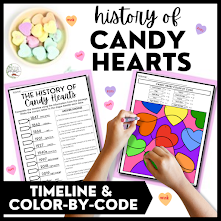
A Valentine's Day bestseller, this reading comprehension passage with a timeline and color-by-code activity will teach your students about the iconic heart candy that they know and love!

⭐ "My students enjoyed learning about this holiday in a unique way. The kids have always had this candy so they were intrigued since the passage was relatable."

Leap Day (February 29)

You only have a chance to celebrate it once every four years, so your students will be instantly engaged! 

This escape room incorporates the history of Leap Day, the science behind why we need to add an extra day to our calendar every four years, and math related to this special day. Students answer the comprehension questions to crack the secret codes. At the end, they color a color-by-code activity!


February Writing Centers

Looking for a quick new warm-up routine or a center activity that will actually engage your reluctant writers? You need these writing activities!

"We do a prompt a day and the kids love to answer and talk about it with their peers. They find it very engaging and are willing to do some writing!"

There's just something about a daily fun fact that gets students excited about writing! Try out the February prompts for this day in history. (If you're looking for tips to start this new routine in your classroom, check out this blog post about quick writes!)


If you need to fit a little social-emotional learning into your daily lessons, these daily journal prompts and check-ins are a great way to do it. The month of February focuses on building and reflecting on honesty.


No matter what subject you teach, there are lots of ways to incorporate a little February fun into your classroom! I hope you enjoy these resources and that they bring a little brightness to the February gloom.


Jan 17, 2024

Integrating Technology in Social Studies

Written by Emily Upton - Posted January 17, 2024

Social studies is arguably one of the least-loved content areas by students. I said it! The stuffy textbooks, events that happened a loooooong time ago that don't seem relevant to students today, and lack of hands-on learning that comes so easily in math and science can lead to your students groaning when they hear it's time for social studies class.

But it doesn't have to be that way! You can leverage one of your students' favorite things to collect data, reduce your grading, and skyrocket engagement in social studies. The secret? Technology!

I'm alllll about using technology in an actually meaningful way in the classroom. We both know that students spend too much time staring at a screen, so when I break out the Chromebooks, I want to make sure that what my students are working on matters. Check out my favorite ways to provide meaningful learning experiences with technology in social studies class!

Digital Games

I love using digital games to review or assess student understanding of a topic. 
Let's explore some of my favorite websites!

Competition Games

What's more engaging than a competition? For whole-group games, my favorite sites are listed below. They each have THOUSANDS of pre-made games! I loved searching for "French and Indian War" for example and picking a game for my students to play. Plus, these games are self-grading! Quizizz especially are great to use as independent work and using student scores as a grade.

Video Assignments

For video assignments, Edpuzzle is the BEST! Edpuzzle takes YouTube videos and allows you to embed questions along the way. Your students won't be able to skip ahead, and you'll have actionable data about their understanding of the content. These are also awesome for sub plans! You can read more about why I love Edpuzzle in this blog post.

Podcasts

Podcasts are another great digital tool to use in the classroom. Your students can listen to a short synopsis of the history topic they're learning about! Here are some ideas for using podcasts in your social studies classroom:
  • Create your own podcast! You can upload a recording of yourself to YouTube and share the videos with your students. I did this to teach about the causes of the American Revolution, and my students LOVED it! (You can check out those podcasts here.)
  • Real Cool History for Kids or Homeschool History - These brief podcasts relate to specific people or events in history. They are great to assign for students to listen to independently, or you can listen to together to introduce a topic. I always recommend listening BEFORE you share with students, just to make sure all content is appropriate. 😉

Digital Assignments

Assigning digital work can be a great way to get your students engaged in independent work. I love using digital assignments to either give students a preview of the entire unit or as a summative assignment at the end to wrap things up! You can check out a few of my favorite digital history assignments below.

⭐⭐⭐⭐⭐ "This resource is fantastic. I really enjoyed using it because it allowed my students to practice skills with fun and engaging content. I enjoy the ease and appreciate how much thought was put into creating it."

Digital explorations are one of my fave assignment types! This resource has a ton of information, but its broken down into bite-sized, manageable activities and chunks that leave students feeling successful.


⭐⭐⭐⭐⭐ "Covering the French and Indian War is a challenge due to all the different players and motives involved. This was a great resource to make it as clear as possible to my students."

Introducing a broad topic like the French and Indian War can be tricky with students. I like to frontload all of the info with an introductory activity like this one. Then, students have background knowledge they can refer to throughout the unit.

So, next time you're struggling to plan a social studies activity that won't leave your class yawning, try one of these technology tools! You'll be amazed at how engaged your students are, and they might even learn something along the way. 😉


Oct 24, 2023

November Centers Roundup for Upper Elementary

Written by Emily Upton - Posted Oct. 24, 2023

November brings with it the cozy vibes of autumn and a golden chance to spice up the classroom for your upper elementary students. As you get closer to Thanksgiving and winter break, it can be tricky to keep your kiddos on task and engaged in their learning, especially with all of the seasonal classroom disruptions!

In this blog post, we'll round up some of the best seasonal center ideas, early finisher activities, and ways to keep your students hyped about learning (and not just thinking about turkey dinner.)

Click on the images below to check out the resources.

A white background with red, yellow, green, and orange leaf counters. The text reads November Centers Resource Roundup.

READING & WRITING CENTERS

Looking to engage your readers while visions of turkeys dance in their heads? These no-prep reading activities will get your students referring to the text for evidence and foster cross-curricular connections in your ELA classroom! 

Have you ever wondered how Thanksgiving is celebrated around the world? This reading and writing activity will give students a global perspective as they learn about major Thanksgiving celebrations in different countries. Prefer the printable version? Click here!

⭐ "Thank you so much for a resource jam-packed with great information that is appropriate for the holiday!"

Do your students hate writing? Quick writes could be the solution! These short prompts feel less intimidating than a full writing project, and the daily fun facts get kiddos excited about the writing process. The best part? They're no prep and perfect for warm ups or centers!

 "Such a fantastic resource! It has really helped build my students writing stamina and get them interested in historical information!"

This activity will immerse your upper elementary students in the rich history of Veterans Day. Your students will read a passage that explains the history of Veterans Day and why it is celebrated. Then, they will use that information to complete a timeline and color-by-code activity.

"I am a vet and now a teacher. This is a great resource. I like the emphasis on the timeline, too."

MATH CENTERS

Math centers can have a Thanksgiving-themed spin while still reviewing important content! Check out these math resources that are sure to keep your little turkeys focused during centers.

Escape rooms are a great way to engage students in math! This escape room includes helpful tips for each room that keep your students unstuck so that you can keep working with small groups. Practice a variety of division problem types in an exciting storyline. Self-checking and no-prep: does it get any better?

 "Used this during our intro to division lessons, great practice!"

Math trivia is a sneaky way to work in a little math practice with something that always engages my students: fun facts! Each correct answer gives students insight into trivia about Thanksgiving, like what percentage of people like pumpkin pie the best or how much people spend on Black Friday. It's no-prep and self-checking, which is great for centers. My favorite part is that as students answer the questions correctly, the images change. They know they have everything right when the 4 images match!


I absolutely love these seasonal challenge puzzles from Greg Tang! While I wouldn't use them as an assignment because there's no way to check if students completed each part, these are GREAT early-finisher activities! They're also differentiated by grade level. Click the link above to check them out!


SOCIAL-EMOTIONAL LEARNING

If you want to build a daily routine that gives students the opportunity to check in with their emotions and reflect on different SEL strategies, this journal is for you! With themed monthly check-ins, November's SEL journal focuses on developing self-control in different situations. Students reflect on the obstacles they face when practicing self-control, as well as which strategies help them stay in control in tricky situations.


I hope your November is full of allll the mashed potatoes, fall leaves, and football that you desire! Use these resources to get your centers planned faster than a turkey trot.

Looking for other holiday roundups? Check out the Halloween Center Roundup here!

Sep 5, 2023

3 Lesson Organization Hacks That Will Change Your Life

Written by Emily Upton - Posted Sept. 5, 2023
    
Remember the days when organizing your life meant "Marie Kondo-ing" every nook and cranny of your house or apartment? While decluttering and sparking joy is its own kind of therapy, as a teacher, your daily focus is keeping your lesson materials as organized as possible. The last thing you want is to spend precious minutes searching for a worksheet while your classroom descends into anarchy. If that's been you (we've allll been there), I've got your back, because we're going to explore my three favorite lesson organization hacks that will take your lesson plans from "crap, where is it?" to smooth sailing in no time.

Glasses and a keyboard with the text 3 lesson planning hacks that will change your life.

1. "Week at a Glance" Google Slide: Your Lifesaver

    Imagine having a single document with everything you need for the entire week. I'm talking content plans, reminders about special assemblies, substitute teacher arrangements, links to daily slideshows and other resources, and a snapshot of each lesson. Meet the "Week at a Glance" Google Slide, your ultimate game-changer.

    This simple yet brilliant solution involves creating a Google Slide with a table labeled with the days of the week. You and your teaching partner (or substitute teacher) can collaborate on this shared document seamlessly. Jot down essential details like lesson titles (e.g., "Lesson 3.2 Division with Remainders"), links to resources (hello Google Drive worksheet links), and any other critical information.

    One feature you're going to want to include? Color coding. Create a new slide each week with a green background and change the old one to red. Not only does this help you quickly see what's on the agenda for each day, but it also provides an invaluable record of your entire year's lessons, down to the day. When I was out on maternity leave, this doc was also shared with my long-term sub, ensuring a seamless transition in teaching.

2. Daily Google Slides: Your Lesson Roadmap

    Daily Google Slides are your absolute must-have for staying organized during instruction. These slides serve as your lesson roadmap, containing links, videos, your Morning Meeting slide, and any other materials needed for the day. What sets these slides apart is their dynamic nature; you can embed timers to keep your kiddos (and you!) on track for each part of the lesson. Website links let you model for your students exactly what you want them to do when you set them loose on their Chromebooks. And embedded videos and content visuals keep students engaged and on task. Need I say more?

    Now, you might be thinking, "I literally do not have time to finish the latest episode of The Bachelor, when am I supposed to create slides for each day?!" While creating these slides may seem time-consuming at first, the payoff is tremendous. They can be reused year after year making lesson planning a streamlined event. No more scrambling to find that one video link or struggling with timing—everything you need is neatly packed into your Daily Google Slides from the previous year.

3. Rainbow Organizer Drawers: Your Weekly Worksheet Savior

    If you still need to jump on the rainbow organizer drawer bandwagon, it's time to hop aboard. Those colorful organizer drawers from stores like Michaels are the best way to keep those millions of worksheets organized and at your fingertips.

    Here's how it works: designate a drawer for each day of the week, creating a daily bin. In each bin, store all the copies and materials you need for that day's lesson. As you start your day, simply pull out the entire stack and place it on the corner of your desk for easy access.

    The real trick to success with this method is consistency. When you're making copies in advance, attach a sticky note to label the days of the week. Any extra copies or materials that don't fit in the bins can be stored neatly in your cabinet with corresponding stickies.

    By implementing these 3 lesson organization hacks into your teaching routine, you will feel like the teacher boss that you are. No more searching for lost worksheets or feeling overwhelmed by the daily chaos of teaching. With these strategies, you'll have more time to focus on what truly matters—actually teaching. Try out these organizational tools, and watch your teaching experience transform for the better!

A woman with glasses is sitting at a desk lesson planning. The text reads My Top 3 Lesson Planning Hack That Will Change Your Life.

© Teach Like a Pangolin 2023-2024
.